Derbyshire Tiling Specialists logo

BATHROOM TILING · DERBY & DERBYSHIRE

Bathroom tiler Derby

Bathroom and wet room tiling, underfloor heating and shower board installation across Derby and Derbyshire, with tile advice that skips the jargon so you know exactly what you are getting.

  • Part of Derbyshire Specialists Group
  • £10m public liability insurance
  • Floors, walls, showers and wet rooms
  • Homes and businesses
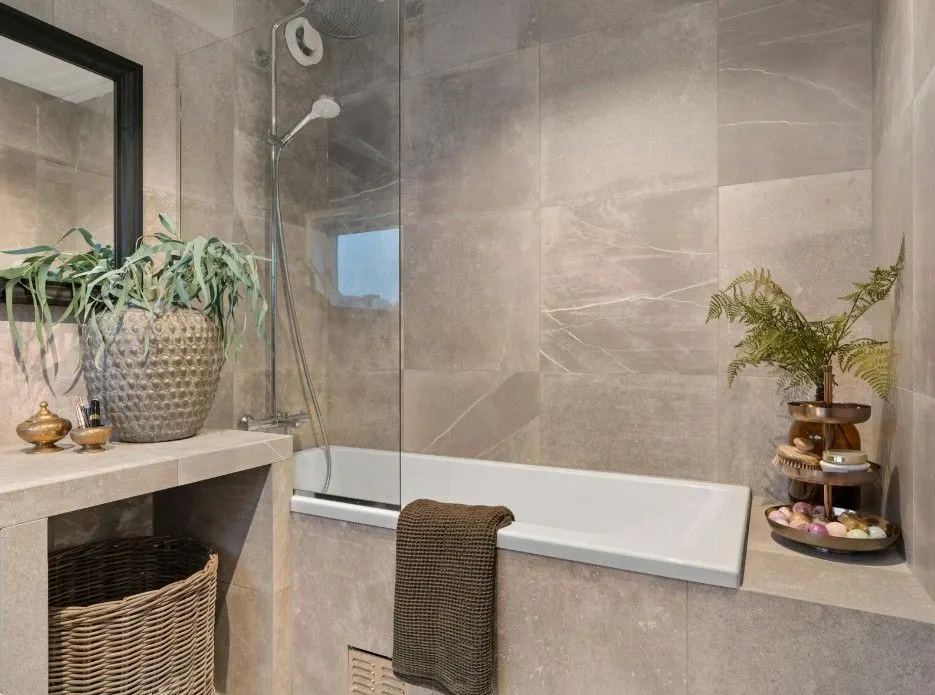
Large-format wall and floor tiles around a bath and glass shower screen in a Derby bathroom
0% APR finance available, subject to status

Bathroom tiling

At Derbyshire Tiling Specialists we appreciate that bathroom tiling is not just about looks. It plays a crucial role in hygiene and durability in one of the most used rooms in the home. Get it right and you create a calm, relaxing space to start and end the day.

Whether you are renovating an existing bathroom or designing a new one, choosing the right materials, tile layout and preparation is essential for a stylish and practical finish.

Our experienced Derby tilers can help you choose the best tiles for your bathroom, explain the role of tile backer boards, and talk you through what to consider for bathroom floor tiles, wall tiles, or whether another option such as shower boards suits you better.

Bathroom tiling we do

  • Floor tiling in ceramic, porcelain, natural stone and vinyl
  • Wall tiling, floor to ceiling or part height
  • Showers and wet rooms, with waterproofing first
  • Shower boards and wall panels
  • Underfloor heating under new floor tiles

Bathroom floor tiling Derby

Best tiles for bathrooms

When it comes to choosing the best tiles for a bathroom, several things need to be taken into account: slip resistance, water absorption, maintenance and style. Here's a breakdown of the popular options.

Ceramic tiles

Among the most common choices for bathroom floors and walls thanks to their moisture resistance, affordability and ease of installation. They come in many sizes, colours and designs, so they suit most styles.

Porcelain tiles

More durable and less porous than ceramic, porcelain is an excellent choice for bathrooms. It resists water and stains and can mimic the look of natural stone with added durability.

Natural stone

Marble, granite and slate bring luxury and elegance. They need more maintenance because they are porous, and sealing is recommended to prevent water damage and staining.

Glass tiles

Often used as accents or splashbacks, glass tiles create an eye-catching effect with their reflective finish. They are harder to install because they are fragile, and they can be slippery underfoot.

Vinyl tiles

Luxury vinyl tile (LVT) is gaining popularity for its water resistance, comfort and easy maintenance. Many designs mimic wood or stone while feeling warmer underfoot than ceramic or porcelain.

Not sure which to choose?

Our guide to tile types and where they work best compares each option, or send us photos of your bathroom and we'll recommend what suits the room and your budget.

Considerations for bathroom floor tiles

When selecting floor tiles for a bathroom, several factors come into play:
  • Slip resistance: safety is paramount in a bathroom. Look for tiles with a high slip rating, often marked R10 or higher.
  • Durability: a bathroom floor takes heavy daily use, so prioritise durable porcelain or ceramic with a PEI (Porcelain Enamel Institute) rating suitable for homes.
  • Water absorption: choose tiles with a low water absorption rate, which matters most where moisture levels are high.
  • Maintenance: tiles with minimal grout lines are easier to keep clean, as narrow joints are less likely to trap dirt and grime.
  • Style and size: large format tiles can make a small bathroom feel bigger, while smaller tiles allow more intricate patterns. Colour and texture shape the whole look of the room.
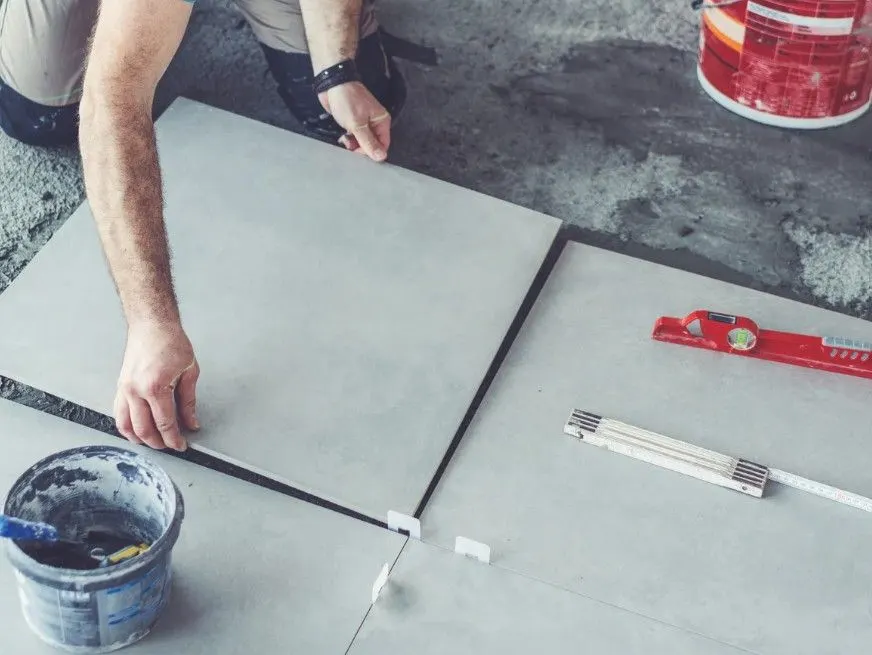
Tiler laying large-format stone-effect floor tiles with levelling clips

Bathroom and shower tiler near me

If you live in Derby or further afield in Derbyshire and are looking for a bathroom or shower tiler near you, we're ideal. Get in touch today for a quote.

Bathroom wall tiler Derby

Tile backer boards vs plasterboard walls

When installing wall tiles, particularly in wet areas, the backing material is crucial for long life and preventing moisture damage. There are several schools of thought on the best and most cost-effective backing for tiling a bathroom.

Tile backer boards

Designed for wet areas like bathrooms and showers. Made from cement-based materials or foam, they offer excellent moisture resistance and are denser than traditional plasterboard, which makes them a more robust base for tiles. A backer board gives better adhesion and reduces the risk of moisture getting behind the tiles and causing mould or damp.

Plasterboard walls

Standard plasterboard is fine in dry areas but not recommended in wet zones, because it can soak up moisture and deteriorate. If tiles go onto plasterboard in a wet area, moisture-resistant plasterboard should be used, but tile backer boards are preferable for any surface exposed to water.

In reality, properly installed tiles and grout provide a watertight barrier, so some will say the extra cost of tile backer boards is over-specification, and there is some truth in that. But if you want your bathroom refit to last for many years, and it gets heavy use or the odd knock that could loosen a tile or crack the grout, a tile backer board is justified.
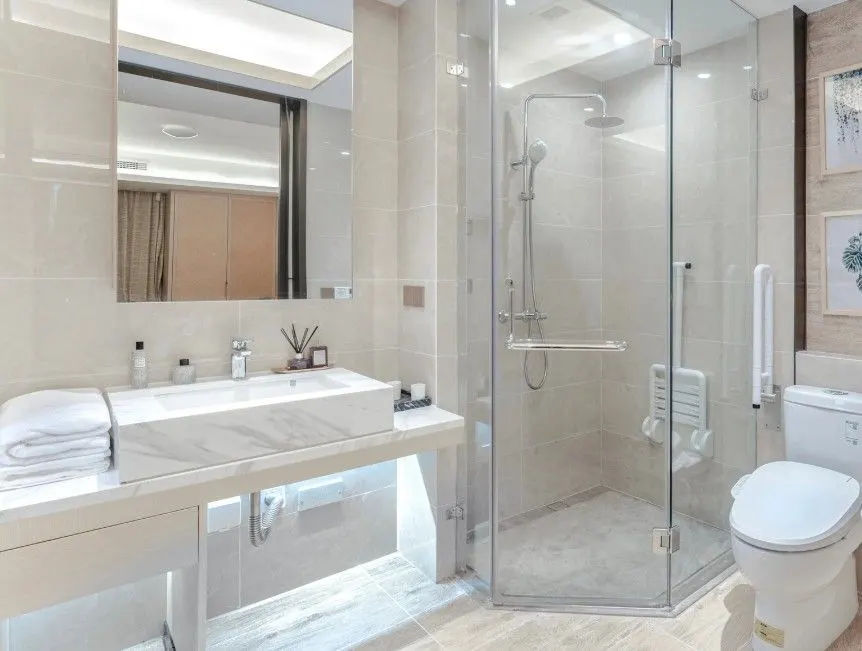
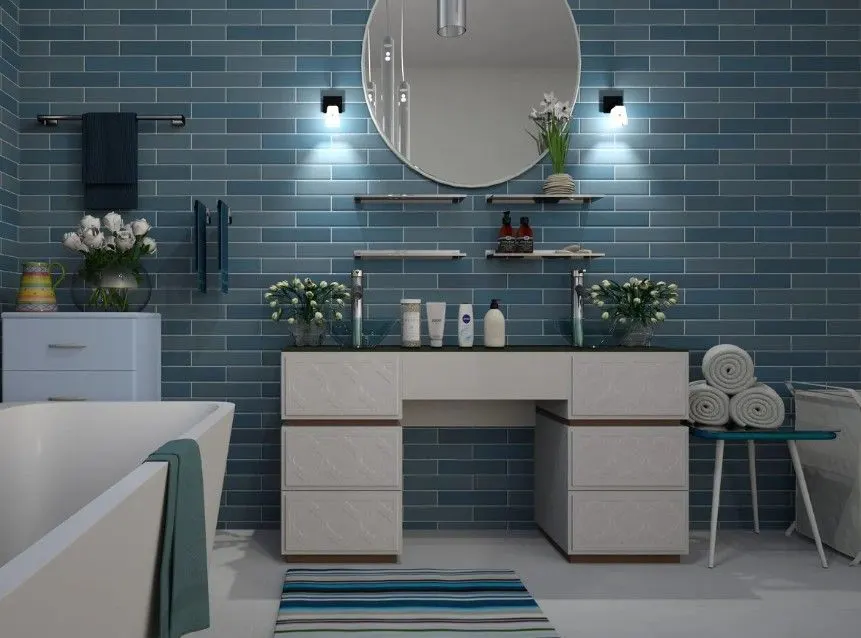
Floor-to-ceiling wall tiling around a corner shower and vanity unit

Wall tiles: floor to ceiling or not?

Whether to tile walls from floor to ceiling depends on your bathroom's design, size and how it's used.

Floor-to-ceiling tiling creates a seamless, elegant look, especially in smaller bathrooms where making the most of the space matters. It also reduces the risk of mould and moisture damage, because the whole wall is protected. A consistent tiled finish gives a spa-like feel and works particularly well in wet areas such as shower enclosures.

Partial tiling, to half height or around the bath and basin, can save money and leaves room for paint or wallpaper on the dry parts of the wall. It gives you more freedom to combine colours and textures.

Ultimately, the decision usually comes down to the look you want and how the room needs to work. If you like the idea of a statement wall, see our feature wall tiling ideas.

Bathroom tiling costs in Derby

Every bathroom is different, so we price each job on the area, the tiles you choose and the preparation the walls and floor need. As a guide, these are the typical ranges from our Derby tiling cost guide:

Bathroom tiling jobTypical cost
Bathroom floor (5–7 m²)£400–£600
Full bathroom, walls and floor (about 20 m²)£1,500–£3,000+
Preparation, such as removing old tiles and waterproofing£150–£500
Underfloor heating under new floor tiles£30–£60 per m² extra

Figures usually include tiles and installation. Natural stone and mosaic tiles, intricate layouts and extra preparation push costs higher. Send us photos for a fixed quote.
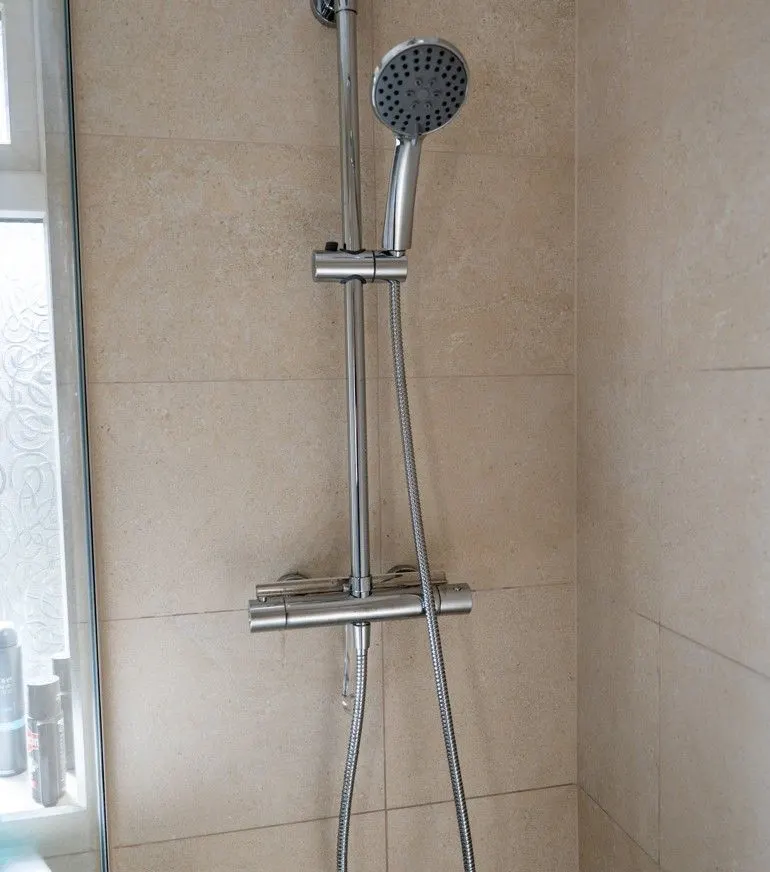
Recent bathroom tiling

Shower panels Derby

The popularity of shower boards

In the UK there has been a noticeable shift towards shower boards, also known as wall panels or cladding, as a modern alternative to traditional tiling. They are popular for several reasons:

  • Ease of installation: shower boards are usually quicker to fit than tiles and can often go directly onto existing flat surfaces, reducing preparation and removal work.
  • Seamless appearance: large panels mean fewer visible joints, which looks sleek and leaves fewer places for mould and mildew to grow.
  • Waterproof and durable: most boards are PVC or acrylic, so they are fully waterproof, which suits bathrooms with high moisture levels.
  • Low maintenance: unlike tiles, there is no grout to scrub. A quick wipe keeps them clean, and the smooth surface resists stains and discolouration.
  • A wide range of designs: realistic stone, warm wood and high-gloss finishes, so you can match the panels to your style.

If you live in or around Derby and want an experienced shower panel installer, get in touch to arrange a quote.
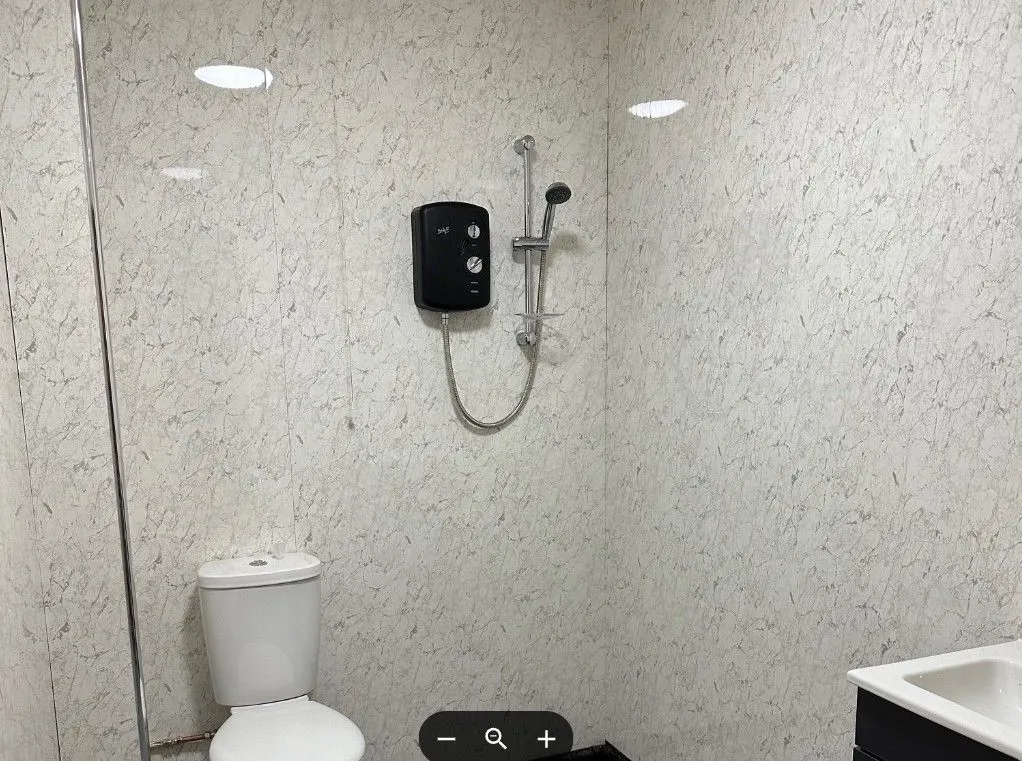
Stone-effect shower wall panels fitted floor to ceiling around an electric shower

How we tile a bathroom

Good preparation is the difference between tiles that last and tiles that crack or let water in. Open each step to see how we work.
When installing new bathroom flooring there is often a sizeable job removing the existing floor and preparing it properly for new tiles. It is really important that the subfloor is flat and stable, as this prevents grout and tiles cracking later.

If the new floor is part of a full bathroom renovation, ideally we tile from wall to wall, including under units and fixtures. That keeps everything on the same level and means no gaps appear if you replace anything in future. Tiling only to the line of your units saves the cost of the extra square metres, but we would only suggest it on a very tight budget.

Depending on the state of the subfloor, we may overlay additional boards or apply screed. Once that is in place, we prime the floor to improve adhesion.

Before laying any tiles we set a start position, often the doorway or the focal point of the room, and mark a grid on the floor as reference points. If you have a mix of tiles or patterned sections, we may dry lay them so you can see them in place and we know exactly how you want them laid.

We then mix the adhesive and trowel it onto the floor. With large or very large floor tiles, adhesive may also go on the back of each tile. We lay the tiles checking for flatness with a spirit level, making sure there are no raised edges (lippage) from one tile to the next.

The tiles should not be walked on for at least 24 hours so the adhesive can cure. Only then do we mix and apply a flexible floor grout. After another 24 hours we clean off any grout haze and carry out a final clean. For natural stone or cement grout we also apply a sealer, and finally run a flexible sealant around the edge of the floor.

The main steps are similar to floor tiling, and good preparation is key. What can change our approach is whether other work is happening at the same time, such as new cupboards or basin units, or moving sanitaryware.

In bathrooms, unlike kitchens, the wall tiles go on first, so that cupboards and shower units are fitted onto the tiles. That keeps a watertight finish, with a little sealant around any holes drilled through the tiles. Drilling pilot holes first stops tiles cracking.

We make sure the walls are clean, dry and free of grease, dust or flaking paint. We may reboard with moisture-resistant plasterboard or use a tile backer board, as tile adhesive can only hide minor imperfections. We then apply a primer to seal the surface and improve adhesion.

Before fitting any tiles we mark out the wall and find the centre point, which tells us the best place to start, generally from the bottom up. That way we avoid filling edges with excess grout or leaving thin slivers of tile, which never look neat.

We mix and spread the adhesive about one square metre at a time so it doesn't go off too soon, then set the tiles, checking they are level and leaving an even grout gap with the right size spacers. Tiles are cut and shaped for a neat finish against every edge.

When all the tiles have set, we mix and apply the grout and sponge away the excess. Depending on the grout, we may apply a grout sealer, then seal along any edges prone to slight movement, such as around the bath.

Shower boards slot together, so they need a flat, even surface. We would normally remove old tiles or wall coverings to expose a clean, stable wall such as plasterboard, plywood or concrete. Some panels can go over existing tiles, but only if those tiles are completely clean, secure and flat. We apply a waterproof membrane about three feet up the walls to provide waterproof tanking.

Before any adhesive goes on, we dry fit and measure the shower area precisely to decide where the panel joints will fall, so the layout is symmetrical and full panels sit in the most visible places.

We then cut the panels to size with a fine-tooth blade so the edges are clean, cutting from the front to avoid chipping the decorative face. Holes for shower valves, pipework and fixtures are cut slightly larger than the pipe, leaving room for sealant behind the trims.

The panels are fixed with the adhesive and sealant the manufacturer recommends, usually a solvent-free grab adhesive applied in vertical beads about six inches apart, kept back from the edges to prevent squeeze-out. Where panels meet each other, a tray or a wall, we run a continuous bead of sanitary silicone, which forms the main waterproof seal.

We fit the first panel in a corner, pressing firmly across the whole panel so the adhesive spreads evenly, then fit the rest. Tongue-and-groove panels slide firmly into the previous panel so the sealant forms a watertight compression joint, and any squeeze-out is wiped away.

Finally we fit the trims and seal every joint. Internal corners get a corner trim or, for a seamless look, a neat bead of colour-matched silicone. We seal around pipe cut-outs before fitting the cover plates, and run a final continuous bead where the panels meet the shower tray or bath.

All sanitary silicone is left to cure completely, usually 24 to 48 hours, before the shower is used.

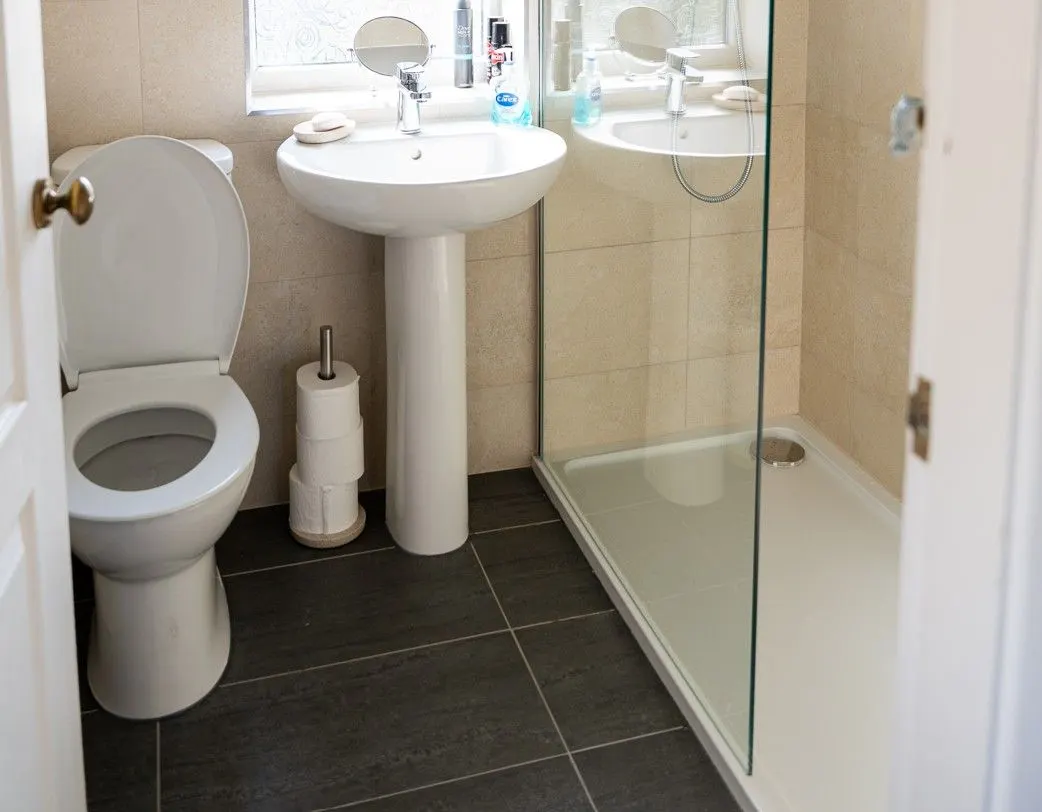
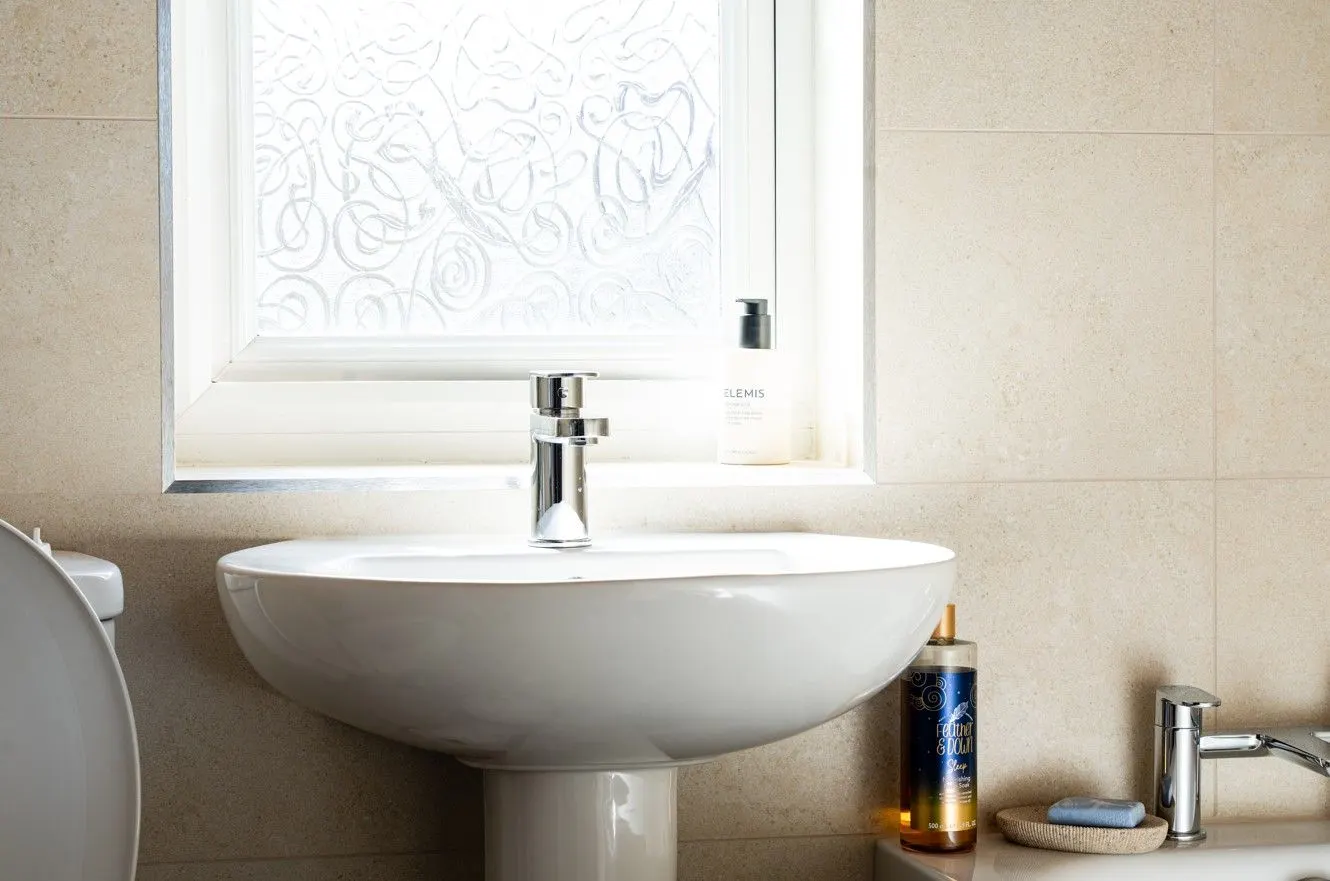
Cream wall tiles fitted around a frosted window and pedestal basin

Bathroom fitters Derby

Tiling is often the finishing touch to a bathroom renovation, but as part of Derbyshire Specialists Group we can put a team together to completely transform your bathroom. Our plumbers can install all your sanitaryware, our joiners can fit cupboards and storage, our electricians can update the lighting and install electric underfloor heating, and our flooring specialist can work with the tiler to level floors and form the drainage falls a tiled wet room floor needs.

So if you were only looking for a bathroom tiler, don't hesitate to ask us to quote for every part of your bathroom renovation. You get one invoice and one guarantee for all the work, and finance options can help you avoid too many compromises on a tight budget.

If the job is smaller, we also replace cracked or loose bathroom tiles and clean, regrout and seal tired grout.

Bathroom tiling questions

We tile for homes and businesses, focusing on a quality finish every time. We talk through bathroom tiling projects without jargon, so you know which tiles are best for you and, if you have already bought your tiles, exactly what installation will involve. As part of Derbyshire Specialists Group we can combine specialist trades for a complete bathroom refit, including underfloor heating, with electricians, joiners and plumbers on hand, but you only get one invoice and one guarantee for all the work. Simple and stress free.

Yes, for several reasons. It gives a sleek, modern look, and the continuous tiling can make the room feel larger and more cohesive. It also gives better protection against moisture and water damage, which are common problems in bathrooms, and tiles are easy to clean and maintain. With so many materials, colours and patterns available, you can make the room your own. It costs more at the start, but the long-term benefits and the look make floor to ceiling tiles, or floor to ceiling shower panels, a worthwhile choice.

There are a couple of options. One is to use a tile backer board, as described above. The other starts with cleaning the whole surface thoroughly, removing dust, debris and any old waterproof layers so everything bonds properly. We then apply a high-quality waterproof primer or sealer to every area that will be exposed to water, paying special attention to corners, joints and plumbing, where leaks usually start. Next comes a waterproof membrane, either a paint-on liquid membrane or a sheet membrane around the shower area and part way up the walls, with every seam and edge overlapped and sealed. We allow the full drying time the manufacturer specifies before any adhesive or tiles go on.

It is possible, but it's not something we recommend or are comfortable doing. We cannot vouch for the existing tiling: some tiles may be close to coming loose, and the weight of new tiles can speed that up. If they do come away, the new tiling goes with them, which is messy and expensive to put right, and over time it can happen in more and more places. Tiling over tiles also makes the room a little smaller. Some DIY enthusiasts take this approach, but few professional tilers would, for these reasons.

As a guide, tiling a small bathroom floor of 5–7 m² typically costs £400–£600, and a full bathroom with walls and floor of around 20 m² £1,500–£3,000 or more, usually including tiles. Removing old tiles and waterproofing can add £150–£500. Natural stone, mosaics and intricate layouts cost more. Our tiling cost guide has the full breakdown, or send us photos for a fixed quote.

More tiling services in Derby

Splashbacks, wall tiles and kitchen floors, timed around your new units.

Hallways, kitchens and open-plan rooms in porcelain, ceramic and stone.

Statement tiling behind a bath, around a fireplace or across a living room wall.

Cracked, chipped or loose tiles replaced and matched as closely as possible.

Deep cleaning, regrouting and sealing to bring tired tiles back to life.

Ceramic, porcelain, stone, glass and mosaic compared, room by room.

Get a bathroom tiling quote

Send us photos of your bathroom and tell us what you have in mind, and we'll come back with a clear quote within 24 business hours. Finance is available on larger projects.

Business Hours

Mon - Sat7:30 am – 6:00 pm
SunClosed

© 2026 All Rights Reserved | Derbyshire Tiling Specialists - part of Derbyshire Specialists Group

Derbyshire Tiling Specialists: Locations Served

Derbyshire Specialists Group Ltd is an Introducer Appointed Representative of Ideal Sales Solutions Ltd, t/a Ideal4Finance. Ideal Sales Solutions Ltd is a credit broker and not a lender (FRN 703401). Finance available subject to status. The rate offered is always provisional and will depend upon your personal circumstances, the loan amount and the term.

Part of Derbyshire Specialists Group since 2022 · £10m public liability insurance through Derbyshire Specialists Group · Find us on Google · Privacy and cookie policy