Derbyshire Tiling Specialists logo

FLOOR TILING · DERBY & DERBYSHIRE

Floor tiling

Floor tiling experts installing ceramic, porcelain, natural stone and luxury vinyl tiles in homes and businesses across Derby and Derbyshire, with the preparation done properly first.

  • Part of Derbyshire Specialists Group
  • £10m public liability insurance
  • Tile, stone and LVT
  • Homes and businesses
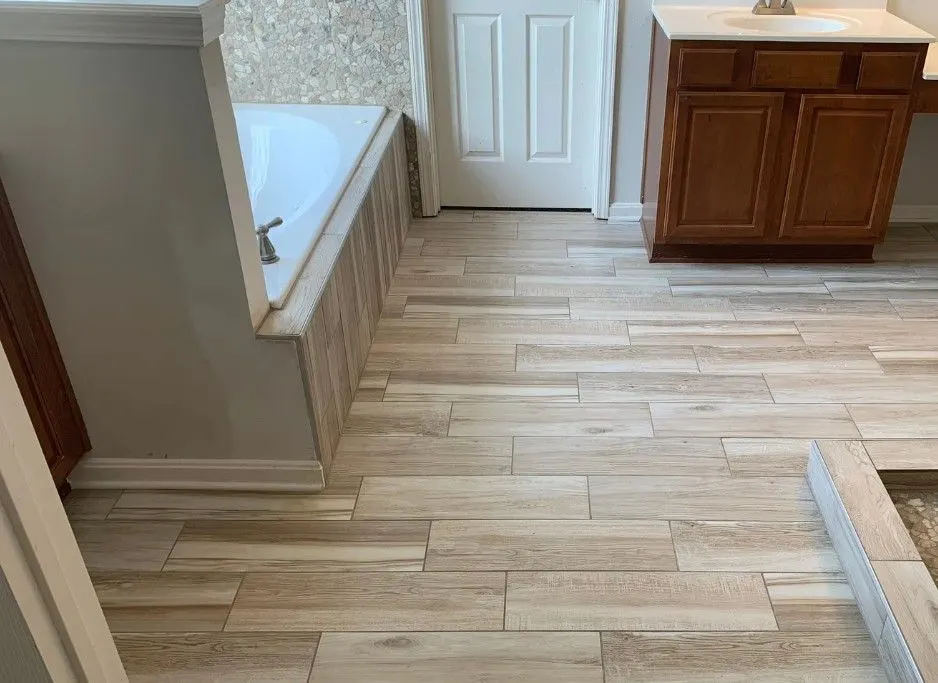
Wood-effect plank floor tiles laid through a bathroom and hallway
0% APR finance available, subject to status

Floor tiler

Floor tiling is a popular choice for homeowners and businesses alike, offering durability, versatility and good looks. Tiles come in many materials, including ceramic, porcelain, natural stone and vinyl, and each has its own properties that affect how it is installed, which is why a floor tiling specialist is the best way to get a flawless finish.

At Derbyshire Tiling Specialists we have laid many, many square metres of floor tiles, and we know that a sturdy, long-lasting finish takes attention to detail and top-quality materials designed for each type of floor tile.

Floors we tile

  • Kitchens and open-plan living areas
  • Bathrooms, en suites and wet rooms
  • Hallways, porches and utility rooms
  • Underfloor heating under new tiles
  • Commercial floors for shops and offices

Floor tiling preparation

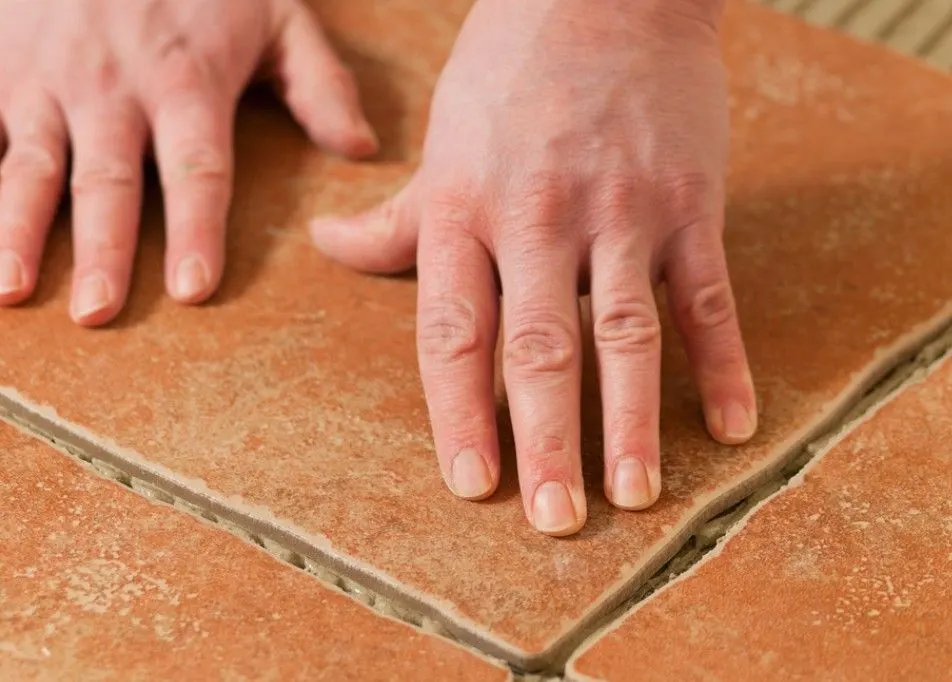
Floor tiling is often wrongly seen as one of the easier DIY jobs, or one of the easier tiling disciplines. It isn't. Floor tiles take more wear than wall tiles, so they are more prone to cracks and damage, made worse if they are not laid to best practice. Proper preparation matters for three reasons:
  • Adhesion: an unstable or uneven surface can make tiles crack or lift over time.
  • Moisture: proper sealing stops moisture getting in and damaging the tiles and the structure underneath.
  • Lifespan: a well-prepared surface makes tiles last longer, as tiles, especially large ones, can crack under pressure if they are not on a flat surface.
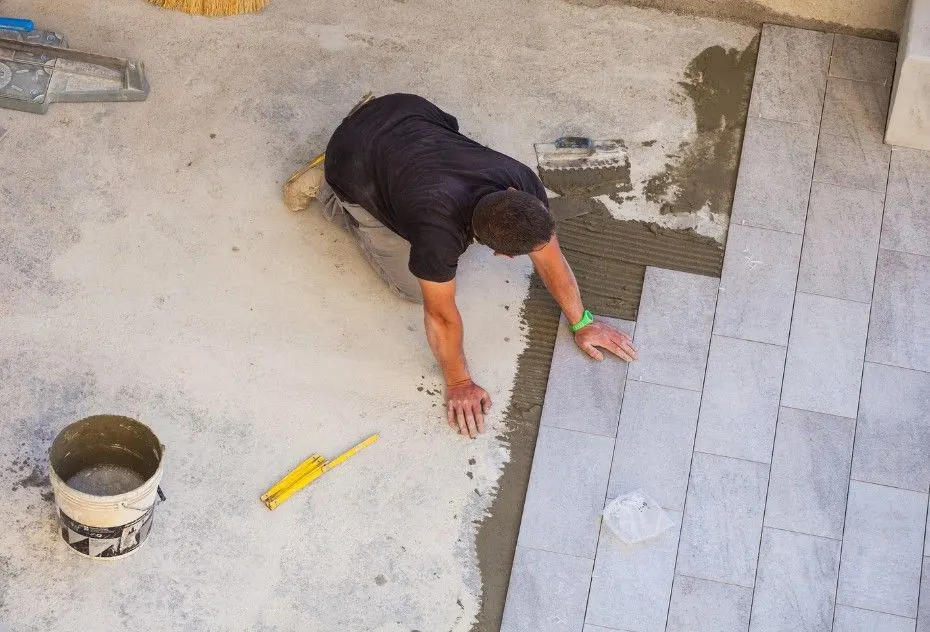
Tiler on hands and knees laying grey stone-effect floor tiles over a prepared screed
1

Assess the subfloor

Our tiler checks the existing floor for cracks, unevenness or water damage. If it isn't suitable, remedial work comes first, such as a layer of screed across all or part of the floor, which affects timings and when the floor can be walked on.

2

Clean it

Dirt, dust, grease and old adhesive are removed so nothing interferes with the bond, using a floor cleaner, a scraper or a sander depending on what is there.

3

Repair and level

Cracks are filled and uneven sections levelled. A wet room floor is formed with a fall to carry water to the waste instead of using a shower tray.

4

Waterproof and mark out

High-moisture areas such as bathrooms get a paint-on or sheet membrane. Then we mark out the layout, usually from the centre of the room, to avoid unsightly cuts at the walls, though the best start point depends on the room.

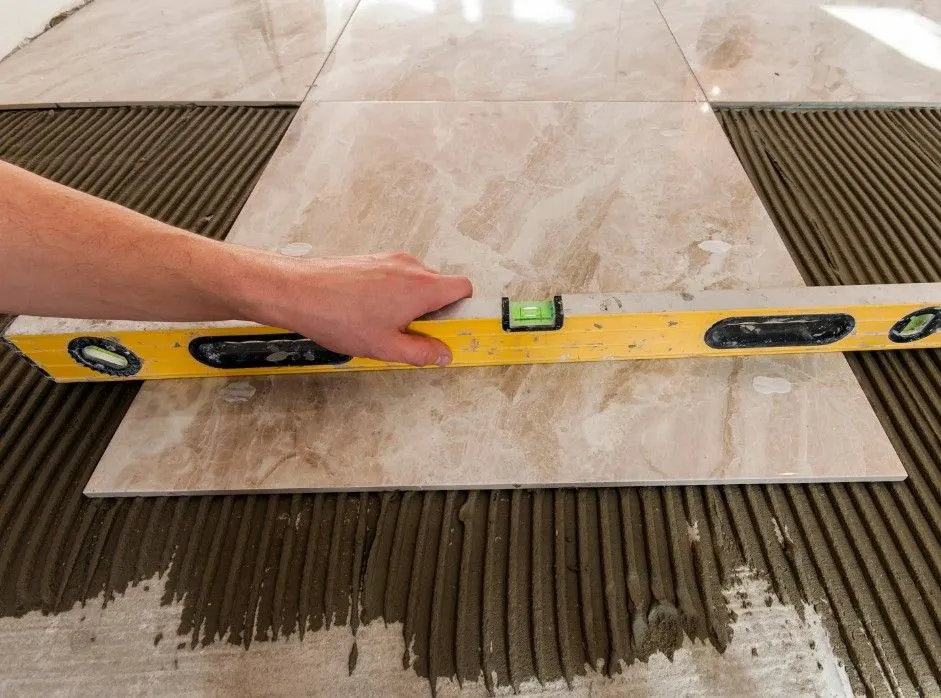
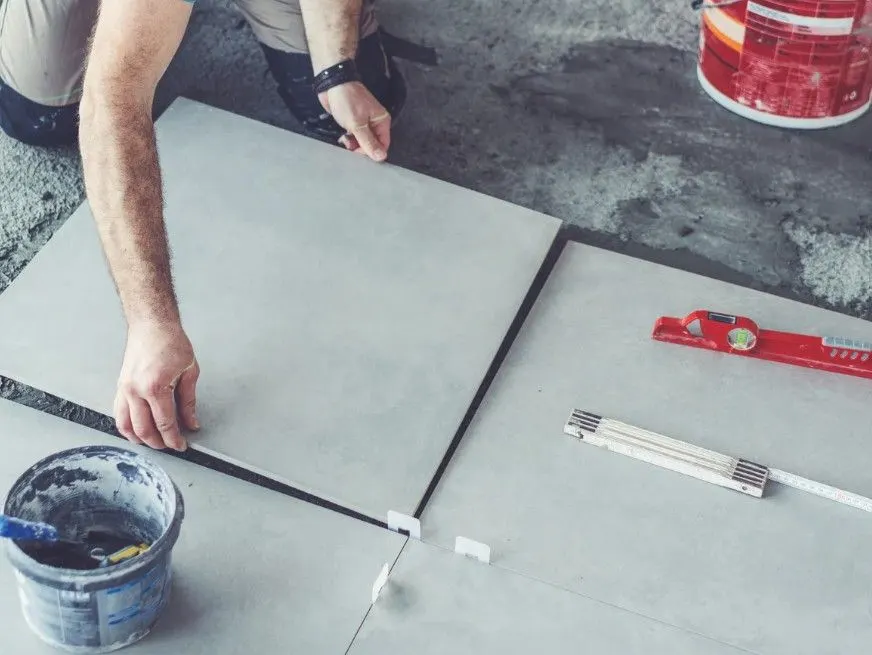
Spirit level checking a large porcelain floor tile laid onto notched adhesive

Floor tiling installation

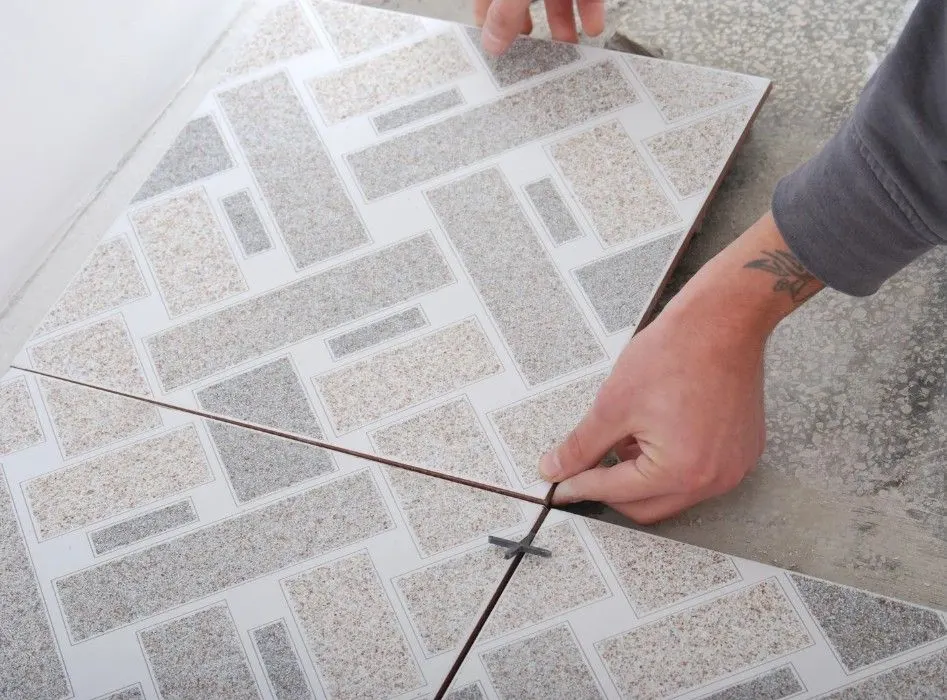
Once the layout is marked out, our Derby tiler applies the right floor adhesive. Choosing the adhesive is crucial: heavier materials like stone need a medium-bed adhesive, while lightweight tiles can use a thin-set adhesive.

The tiler then lays each section from the chosen start point, using spacers for even grout gaps. Once the tiles are down, we recommend at least 24 hours for the adhesive to set and cure. We know that can be inconvenient, so we explain every step in advance so you can plan around it, and if that isn't practical we agree a workaround, such as tiling in sections. Walking on tiles too soon is what causes problems that are hard to put right, like tiles moving and setting in the wrong place.

When the tiles have set, we grout, which can take an hour or two depending on the area, including wiping off the excess for a clean finish. Again, we recommend keeping off the floor for 24 hours, though it matters less once the tiles have set, as long as you avoid the grout lines.

Depending on your tiles, the last stage may be sealing. If so, wait at least 24 hours before walking on them normally; most sealers are touch dry in about four hours, so clean, dry feet or shoes are fine. The key is to keep moisture off for at least 24 hours.

Floor tiler near me

If you live in Derby or further afield in Derbyshire and are looking for a floor or porcelain tiler near you, we're ideal. Get in touch today to arrange a quote and talk through your floor options.

Floor tiling costs in Derby

Every floor is priced on its size, the tiles and the preparation it needs. These typical ranges come from our floor tiling cost guide:

Floor tiling jobTypical cost
Small bathroom floor (5–7 m²)£400–£600
Hallway (about 10 m²)£600–£900
Medium kitchen floor (12–15 m²)£900–£1,500
Large open-plan area (25 m² and over)From £2,000
Preparation, such as levelling or lifting old flooring£150–£500
Underfloor heating under new tiles£30–£60 per m² extra

Figures usually include tiles and installation. Natural stone, herringbone or diagonal layouts and disposal of old flooring add to the cost. Send us photos for a fixed quote.

Types of floor tiles

For a fuller overview of the tiles we lay, see our types of tiles page. The most popular are ceramic, stone, porcelain and vinyl.

Luxury vinyl tiles (LVT)

LVT is the most different floor tile: a man-made, flexible tile rather than the rigid tiles most people associate with a tiler. It is an excellent alternative to traditional tiling. The adhesives are different but the principles are similar, with fewer stages, as LVT needs no grout. That, and the quieter sound underfoot, is the tell-tale sign a floor is LVT. There is a huge choice of styles and makes, and it can give a more playful floor than traditional tiles.

Alternatives to floor tiles

LVT aside, the alternative to tiles is almost any floor finish. Carpet is a different proposition altogether; once you have chosen a solid floor, tiles are usually compared with laminate, lino, wood, engineered wood, parquet, resin and even polished concrete. Many finishes are made to look like others: wood-effect ceramic tiles are very popular in open-plan kitchens with a dining area, so if you like the look of wood but want a low-maintenance floor, tiling could be for you.

Whatever floor you choose, we are happy to install any type of floor tile. If you are still unsure, our flooring specialist will help you through the options to a floor that suits your home.
Recent floor tiling

Floor tiling questions

We tile for businesses and homes, focusing on a quality finish every time. We talk through floor tiling projects without jargon, so you know which tiles are best for you and, if you have already bought them, what installation will involve. As part of Derbyshire Specialists Group we can combine specialist trades for a perfect finish, including underfloor heating, with electricians, joiners and plumbers on hand, but you only get one invoice and one guarantee for all the work. Simple and stress free.

Sweep or vacuum regularly to remove dust and grit, which can scratch tiles if left. For a deeper clean, mop with a mild detergent, or warm water and vinegar, which tackles grime without leaving a residue. Grout lines can hold dirt and stains, so scrub them gently with a paste of baking soda and water and a soft brush. Wipe up spills promptly, and consider resealing the grout every few years. A consistent routine keeps the floor looking good and makes it last longer. If the grout is past saving, our grout cleaning and regrouting service can bring it back.

We avoid blanket recommendations because there are so many variables. There is no point recommending a tile that is outside your budget. Looks matter, but our advice depends on how the room is used and who uses it: children and elderly people need a floor they won't slip on, and so do excitable dogs that can't stop quickly on a hard surface.

As a guide, a small bathroom floor of 5–7 m² typically costs £400–£600, a 10 m² hallway £600–£900, and a medium kitchen floor of 12–15 m² £900–£1,500, usually including the tiles. Large open-plan areas start from about £2,000. Preparation can add £150–£500, and underfloor heating £30–£60 per m².

More from our Derby tilers

Floors, walls and splashbacks fitted around new or existing units.

Including wet room floors with a proper fall to the waste.

Natural stone, patterned or 3D tiles to give a room a focal point.

Damaged tiles lifted and replaced, matched as closely as possible.

Deep cleaning, regrouting and sealing for tired floors.

Porcelain, ceramic, stone and vinyl compared.

Get a floor tiling quote

Send photos of the floor and its rough size, and we'll come back with a clear quote within 24 business hours. Finance is available on larger projects.

Business Hours

Mon - Sat7:30 am – 6:00 pm
SunClosed

© 2026 All Rights Reserved | Derbyshire Tiling Specialists - part of Derbyshire Specialists Group

Derbyshire Tiling Specialists: Locations Served

Derbyshire Specialists Group Ltd is an Introducer Appointed Representative of Ideal Sales Solutions Ltd, t/a Ideal4Finance. Ideal Sales Solutions Ltd is a credit broker and not a lender (FRN 703401). Finance available subject to status. The rate offered is always provisional and will depend upon your personal circumstances, the loan amount and the term.

Part of Derbyshire Specialists Group since 2022 · £10m public liability insurance through Derbyshire Specialists Group · Find us on Google · Privacy and cookie policy